
Workday Tension & Headaches
“My neck tightens as the day goes on, and headaches often follow.”


 Schedule Your Neck Pain Evaluation
Clinic information, patient education, and online scheduling for 100% Chiropractic Austin Rosedale on MendAndFlow.
100% Chiropractic Austin Rosedale 3800 N Lamar Blvd, Ste 160 Austin, TX 78756 (512) 638-8544Recurring Neck Pain & Headaches • Austin, TX
After another normal workday, drive, workout, or night of sleep?
Maybe it started after a screen-heavy day, a stiff morning, a long drive, an upper-body workout, or a stressful week.
The flare-up got your attention. The recurring pattern is what we evaluate, including movement, posture, joint, soft tissue, and neurological signs when clinically appropriate.
Austin Rosedale $49 First Experience for qualifying first-time patients. Reserve today with a $39 deposit applied toward the $49 total.
$49 First Experience for qualifying first-time patients.
Austin Rosedale $49 First Experience for qualifying first-time patients. Reserve today with a $39 deposit applied toward the $49 total.
The special typically includes an initial evaluation and a follow-up findings visit. See exactly what is included.
Recommendations are based on clinical findings and what is appropriate for your case.

Patient trust
Recognition
Most people book after one more normal workday, night of sleep, drive, workout, or stressful week brings the same neck tension or headache pattern back again.
If this flare-up feels familiar, schedule an evaluation to understand what may be driving the pattern.
Find your pattern
“My neck tightens as the day goes on, and headaches often follow.”
“Stretching, massage, heat, or occasional care helps - but the same pattern returns.”
“My neck is interfering with how I train, turn my head, sleep, commute, or move through daily life.”
“I am not sure whether chiropractic is appropriate, and I want a thorough evaluation before deciding.”
Patient proof
Google rating source videos and educational content may help patients understand the clinic experience, clarity of recommendations, and next steps.
Real patient videos shared with permission.
Prompted by: screen-heavy posture, neck tension, and workday strain becoming a recurring pattern.
Valued: feeling heard during the evaluation and understanding why posture-related tension may keep returning.
Real patient video shared with permission.
This patient story focuses on recurring neck tension, screen-related posture strain, the evaluation experience, and feeling more confident about the next step.
Prompted by: headaches, posture strain, and neck tension building through long screen-heavy days.
Valued: a clearer explanation of the evaluation process and what next steps may make sense.
Real patient video shared with permission.
This patient story focuses on desk-work headaches, recurring neck tension, feeling heard during the evaluation, and understanding what options may make sense.
The cycle most people get stuck in
They have already tried stretching, massage, rest, posture reminders, or quick temporary relief. The frustrating part is that the same neck tension, base-of-skull pressure, or headache pattern keeps returning.
That cycle is exactly what this page is designed to explain.
Appropriate care starts with the right evaluation
Some headaches may be influenced by neck or upper-back tension, while others need a different type of medical evaluation. The purpose of your visit is to determine whether conservative musculoskeletal care appears appropriate and to recommend referral when it does not.
Pattern identification
Recurring neck pain and headaches often make more sense once posture stress, neck and upper-back mobility, muscle guarding, desk load, and stress patterns are evaluated together.
Modern workday strain
For many Austin professionals, desk work combines laptops, phones, long sitting blocks, commuting, stress, and limited movement variety. Over time, those patterns can feed recurring neck tension, upper trap tightness, posture fatigue, and headaches.
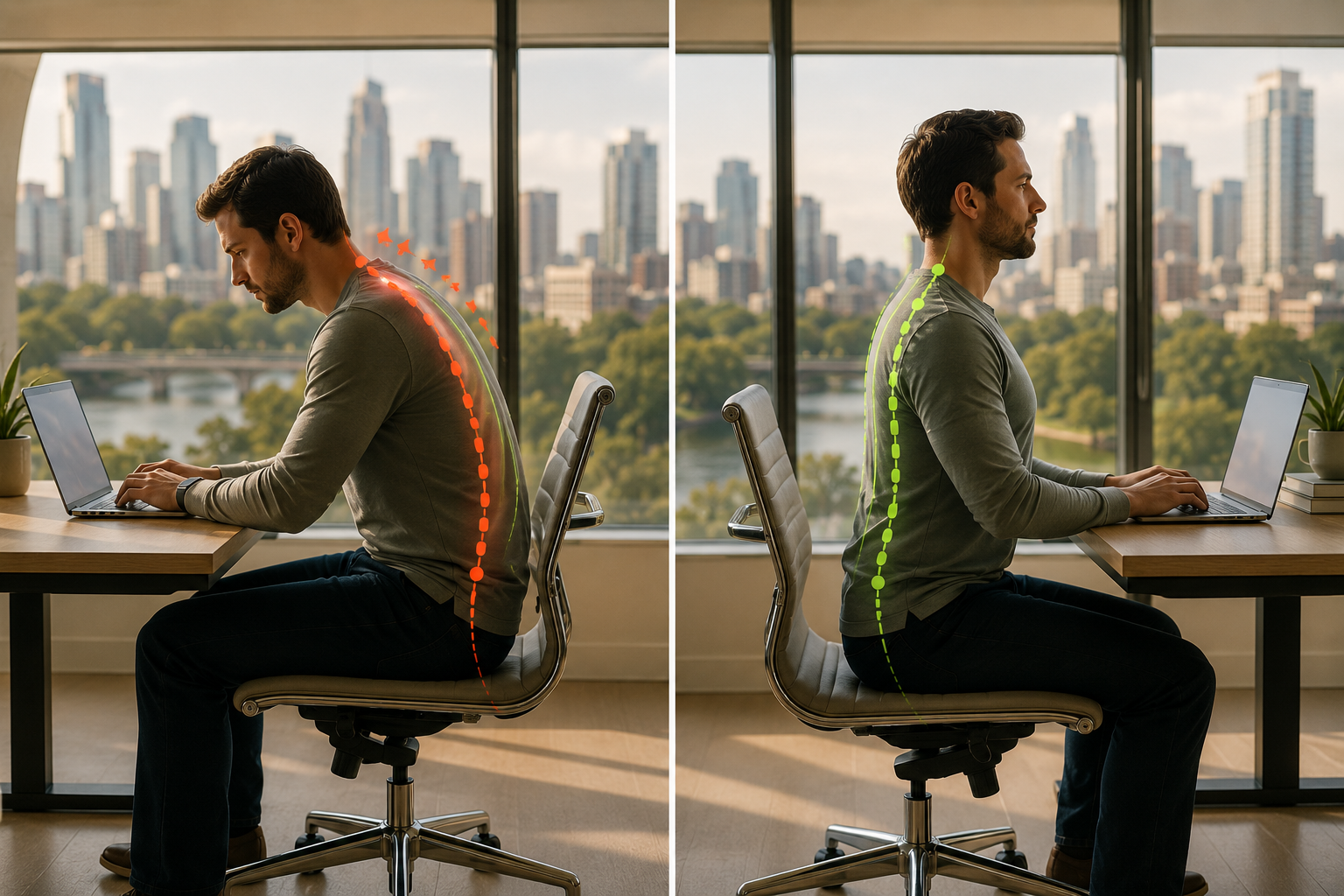
Beyond the desk
Recurring neck tension may also become noticeable during driving, workouts, sleep, travel, parenting, or other activities that repeatedly load the neck and upper back.
Temporary relief vs. pattern change
Stretching, massage, heat, rest, or a quick adjustment may calm neck tension or headaches briefly.
Recurring neck pain usually deserves a closer look at posture strain, mobility limitations, muscle guarding, and stress load together.
What makes recurring neck pain different is predictability.
If the same desk-work tension, upper shoulder tightness, base-of-skull pressure, or headache pattern keeps returning, there is usually a pattern worth evaluating.
What patients want back
Most people are not looking to think about their neck all day. They want it to stop interrupting the things they need and enjoy doing.
These are goals, not promised outcomes. Your evaluation helps determine what may be contributing and what progress may realistically look like for your case.
A better framework
Many people already know how to stretch. Many have tried massage, heat, rest, or occasional adjustments.
The question is not only how to calm the symptoms today.
The question is what keeps recreating the same pattern - and what your evaluation shows is appropriate to address.

We review your history, range of motion, posture, joint restriction, muscle guarding, work habits, and symptom pattern.

Care may include chiropractic adjustments, soft tissue work, mobility-focused care, and corrective guidance when appropriate.

The goal is to improve how your neck tolerates work, driving, sleep, exercise, and everyday movement, with recommendations based on your findings.
Offer clarity
Your first step is designed to connect this recent flare-up to the larger pattern. This special is available for qualifying first-time patients and helps you understand what may be contributing before deciding about care.
The special typically includes an initial evaluation and a follow-up findings visit.
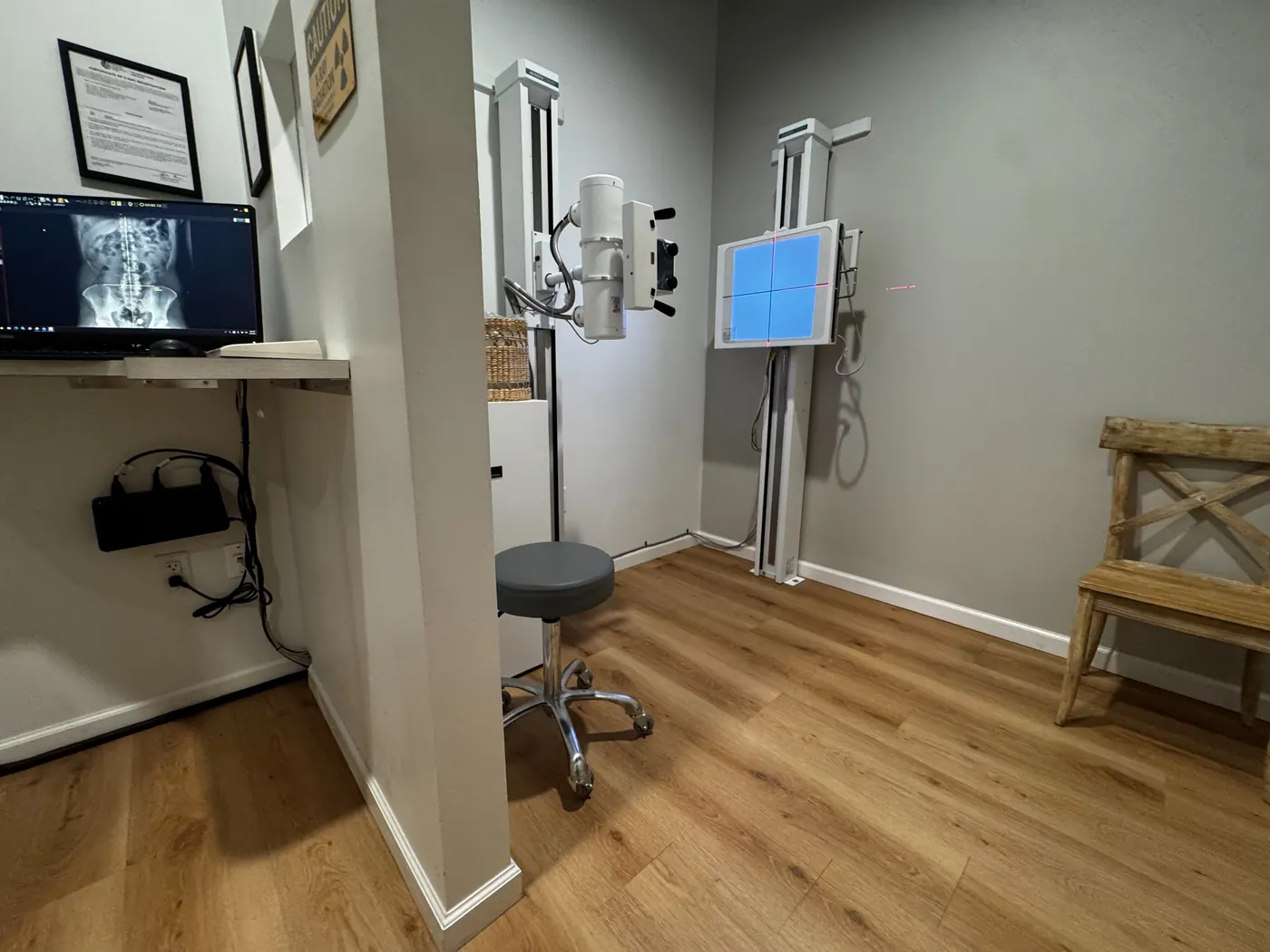
We review your symptoms, headache patterns, daily activities, prior care, and what seems to trigger or calm the pain.
We evaluate how your neck, shoulders, upper back, and posture are moving together - and where your body may be compensating.
Imaging is used only when clinically appropriate based on your history, exam findings, and what the doctor needs to understand your case.
Your first visit may include limited initial care or an adjustment when appropriate for your case and clinical findings.
At the follow-up, exam and X-ray findings are reviewed when applicable so recommendations can be explained clearly.
One available supportive therapy option may be scheduled after the follow-up when clinically appropriate for your case.
If this flare-up feels familiar, schedule an evaluation to understand what may be driving the pattern. Austin Rosedale $49 First Experience for qualifying first-time patients. Reserve today with a $39 deposit applied toward the $49 total. Recommendations are based on clinical findings and what is appropriate for your case.
Why choose this clinic
Many patients come to us after trying stretching, massage, occasional adjustments, or temporary relief strategies for months or years without fully understanding why symptoms keep returning.
Our clinic is designed around helping patients better understand posture stress, movement limitations, mobility restrictions, workday strain, and recurring tension patterns - not simply calming symptoms temporarily.
Dr. Nicolas Kellerman and the team at 100% Chiropractic Austin Rosedale regularly work with patients from Rosedale, Allandale, Brentwood, Hyde Park, North Lamar, and nearby Central Austin neighborhoods who are dealing with recurring neck pain, posture strain, stiffness, and headaches.
We evaluate how the neck, upper back, posture, work habits, and headache patterns work together.
We focus on why symptoms keep returning, not only short-term symptom reduction.
A calm, approachable environment for patients who want clarity without feeling rushed.
You leave with a better understanding of what may be contributing and what options may make sense.
Recommendations are based on your findings and what is appropriate for your case.
We commonly evaluate recurring neck pain, headaches, posture strain, upper trap tightness, and desk-work tension.
From Dr. Nick Kellerman
Dr. Nicolas Kellerman explains how posture strain, neck and upper-back mobility, muscle guarding, work habits, and headache patterns are evaluated together rather than treated as unrelated complaints.
Read current Google reviews for patient feedback about the clinic experience and evaluation clarity.
Read current Google reviewsPosture strain, mobility restriction, muscle guarding, work habits, and recurring tension cycles explained in a calm, conversational format.
Dr. Kellerman explains that recurring neck pain and headaches often make more sense when posture, mobility, muscle guarding, stress load, and daily movement habits are evaluated together.
After an accident?
If your neck pain, headaches, or stiffness began after a rear-end collision or sudden impact, see our whiplash care guide or broader auto accident care page.
Trust and scope
Professional safety note
Recurring headaches and neck pain often reflect repeated posture stress, movement restrictions, muscle guarding, stress load, and daily loading patterns.
When those patterns keep recreating tension through the neck, shoulders, and upper back, symptoms may calm down briefly and then return.
The Austin Rosedale $49 First Experience is a two-visit new-patient experience. Visit 1 may include consultation, posture analysis, examination, digital X-rays if clinically indicated, and initial chiropractic care when clinically appropriate. Visit 2 includes report of findings, review of examination and imaging findings when applicable, personalized care recommendations, and time for questions.
Recommendations are based on clinical findings and what is appropriate for your case.
You pay a $39 deposit today to reserve the appointment. The deposit is applied toward the Austin Rosedale $49 First Experience, leaving a $10 remaining balance at the visit.
Yes. The special typically includes an initial evaluation and a follow-up findings visit so your findings, any clinically appropriate X-rays, and recommendations can be reviewed clearly.
Not automatically. Limited initial care or an adjustment may be provided at the first visit when appropriate for your case, but recommendations are based on clinical findings and what is clinically appropriate.
Not every headache is musculoskeletal. The evaluation considers whether neck mobility, posture, muscle guarding, or upper-back tension may be contributing and whether referral to another provider is more appropriate.
It may wear off when the recurring pattern has not changed.
Stretching, massage, heat, or short-term care may calm symptoms briefly, but posture strain, mobility restriction, stress load, and movement habits can keep recreating tension.
The evaluation can consider how symptoms behave during training, lifting, driving, sleep, and daily movement. Recommendations depend on your findings and goals.
Sudden severe symptoms, significant trauma, facial drooping, weakness, loss of coordination, or other concerning neurological symptoms should be evaluated immediately by an appropriate medical provider.
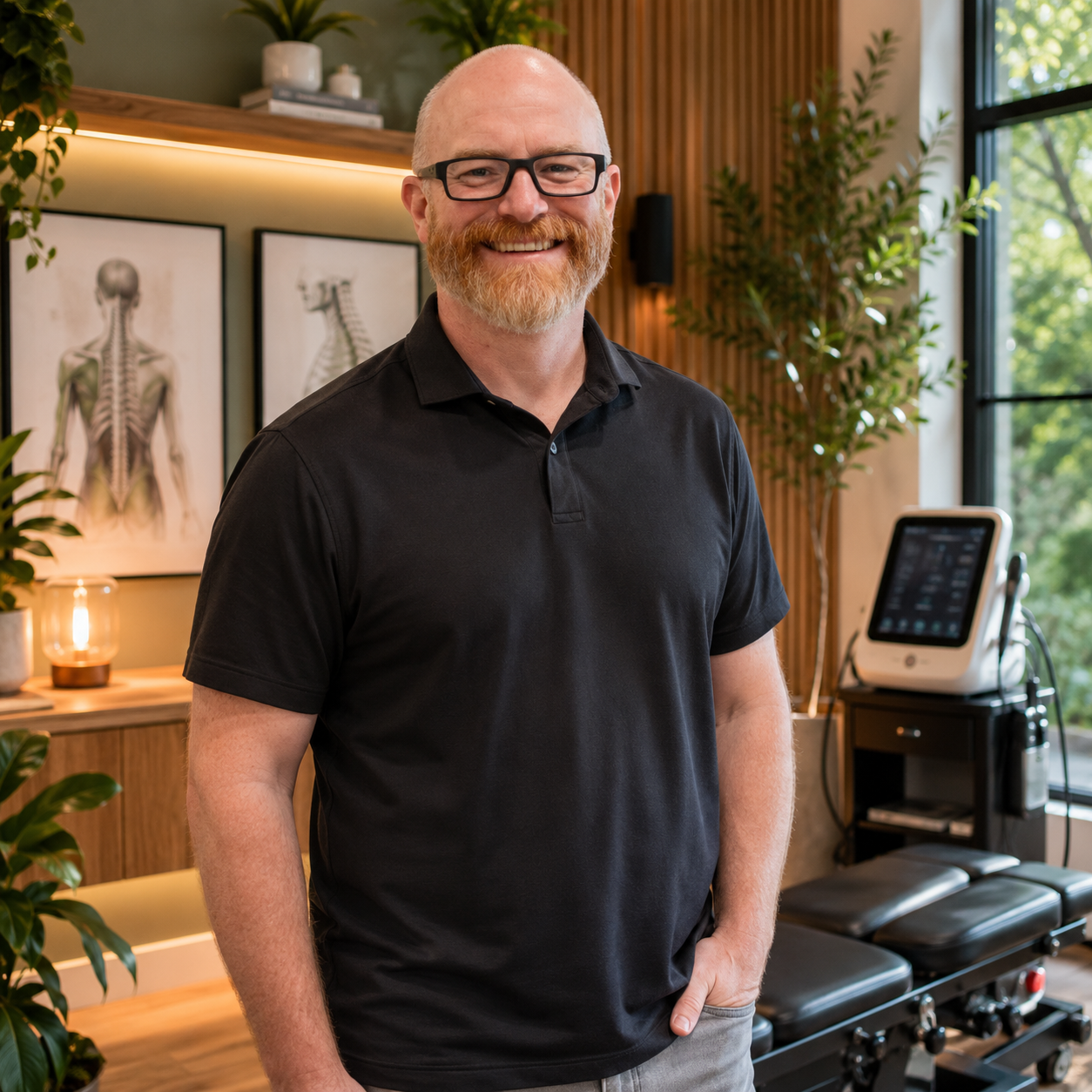
Clinical review
Clinic Director, 100% Chiropractic Austin Rosedale
Dr. Kellerman reviews recurring pain education for clarity, clinical accuracy, and fit with the clinic's evaluation-first approach.
If neck tension, stiffness, or a headache came back after work, sleep, driving, stress, or exercise, the next step is understanding what may be contributing to the recurring pattern.
Book while the pattern is active so the evaluation can consider how it is behaving now and what next steps may make sense for your case.


100% Chiropractic Austin Rosedale
3800 N Lamar Blvd, Ste 160
Austin, TX 78756
(512) 638-8544
Mon-Thu: 8:00am - 12:00pm; 1:30pm - 5:30pm; Fri: 8:00am - 12:00pm
The clinic sits between Local Foods and Westlake Dermatology facing Lamar Blvd and in the same building as Kendra Scott's HQ. We validate parking in the clinic. For garage GPS, use 3809 Medical Pkwy.
Get DirectionsRated 4.9/5.0 on Google
Read current Google reviews for patient comments about the clinic experience, evaluation process, and care recommendations.
Read current Google reviewsMendAndFlow is a healthcare-provider directory and patient-education platform owned and operated by Quake Brands LLC.
This clinic profile and its related educational and online-scheduling pages feature 100% Chiropractic Austin Rosedale.
Clinical services are provided by 100 Chiro Corona LLC d/b/a 100% Chiropractic Austin Rosedale, an independently owned and operated 100% Chiropractic franchise.
Appointment requests made through these pages are for the Austin Rosedale clinic. MendAndFlow does not provide clinical care and is not the corporate 100% Chiropractic website.
100% Chiropractic Austin Rosedale Schedule Your Neck Pain Evaluation